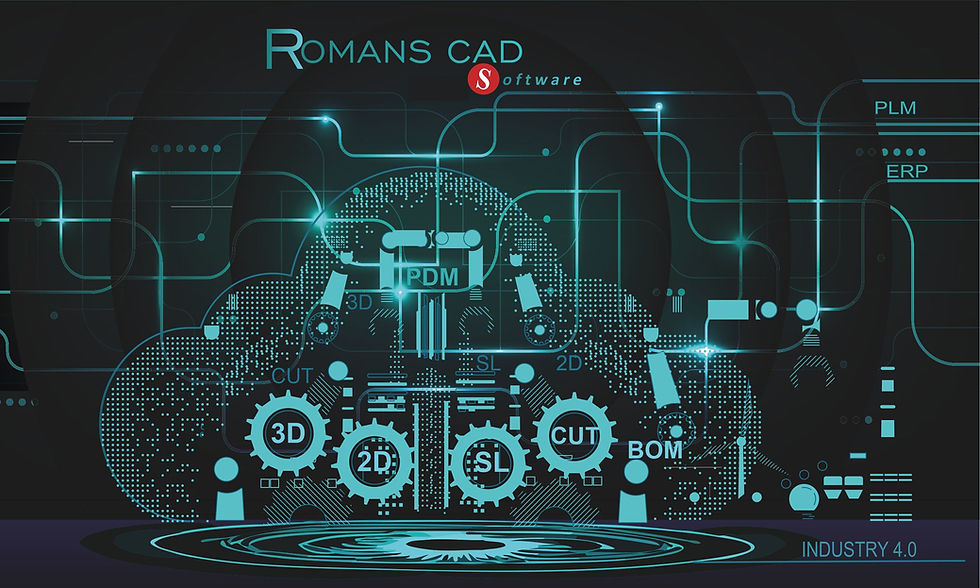
AI is not creating a data problem. It is exposing one.
Artificial intelligence has rapidly become one of the most discussed strategic topics across all industries. In the footwear and leather goods sectors, we are often questioned by our clients exploring how AI can accelerate product development, optimize material consumption, automate documentation, improve forecasting, and support decision-making throughout the product lifecycle.
The opportunities are real — and significant. But many companies are discovering that the biggest obstacle to AI adoption is not the technology itself.
It is the quality of their data.
The question that actually matters
Most conversations about AI focus on what technology can do:
– Can AI generate product concepts?
– Can it help build bills of materials?
– Can it optimise nesting and reduce material waste?
– Can it anticipate production bottlenecks?
These are valid and exciting questions. But before asking what AI can do, companies should ask something far more fundamental:
Can we trust the data that feeds it?
AI learns from existing information. If that information is incomplete, inconsistent, duplicated, or outdated, the outputs will reflect that. The quality of what AI produces is directly tied to the quality of what it is given to work with.
The reality of product data in footwear and leather goods
Anyone working in footwear or leather goods development knows how challenging it can be to maintain consistent, reliable product data. Information is typically spread across CAD systems, ERP and PLM platforms, supplier databases, spreadsheets, emails, and individual files.
Take a single material as an example. Its price, texture rendering, supplier details, and current status may all live in different systems, managed by different departments, updated at different times, or not updated at all.
The consequences are familiar:
– The same leather exists under multiple references across systems;
– Materials are described differently by design, development, and sourcing teams;
– Technical specifications are updated on one platform but left unchanged in another.
Individually, these inconsistencies may seem manageable. Together, they create a state of uncertainty, and AI is not well-equipped to handle uncertainty in its source data.
AI will not fix bad data. It will amplify it.
A common misconception is that AI can compensate for fragmented or unreliable information. AI does not correct bad data, it scales its effects.
An AI tool generating a bill of materials is only as reliable as the product database behind it. An AI assistant estimating costs will produce questionable results if the same leather appears under three different references with three different purchasing histories. An AI system recommending materials will underperform if teams across the company use different names for the same thing.
The issue, in these cases, is not AI. The problem is the data it is built upon.
Garbage in, garbage out, only faster
Data is also knowledge
For footwear and leather goods companies, product data goes far beyond materials, components, and specifications. It also includes something harder to capture technical expertise.
Pattern engineers, product developers, production specialists, and technical managers accumulate knowledge over years. They know which constructions hold up. They understand material behavior under stress. They know the manufacturing constraints that rarely appear in formal documentation.
Too often, this expertise lives in emails, personal notebooks, informal spreadsheets, or simply in people's heads. When an experienced pattern maker retires, a significant part of that knowledge can be lost with him.
AI can help companies preserve and build on this expertise. But only if that expertise has first been captured, structured, and made accessible.
What AI readiness actually looks like
For footwear and leather goods companies, being ready for AI starts long before deploying an AI solution. It begins with building a solid digital foundation:
– Standardized and structured material and component libraries;
– Controlled and unique references and variants;
– Consistent terminology shared across all departments;
– Structured product information at every stage;
– Reliable bills of materials and part lists;
– Integrated workflows from design through to sourcing and manufacturing;
– Preserved and accessible technical know-how.
In short: a single, trusted source of truth across the entire product lifecycle.
A genuine competitive advantage
The companies that will benefit most from AI may not be those spending the most on AI platforms. They are likely to be the companies that have invested most in the quality, consistency, and accessibility of their data.
Good data and capable AI are not in competition; they work together. But the data must come first.
AI is only as good as the data it can trust.
Before AI can transform the way footwear and leather goods companies operate, those companies need reliable, consistent, well-structured information to give it.
And in an industry where that has historically been a challenge, trusted data is fast becoming one of the most valuable assets a company can build.
— Romans CAD